Tools for Commercial Espresso Machine Cleaning
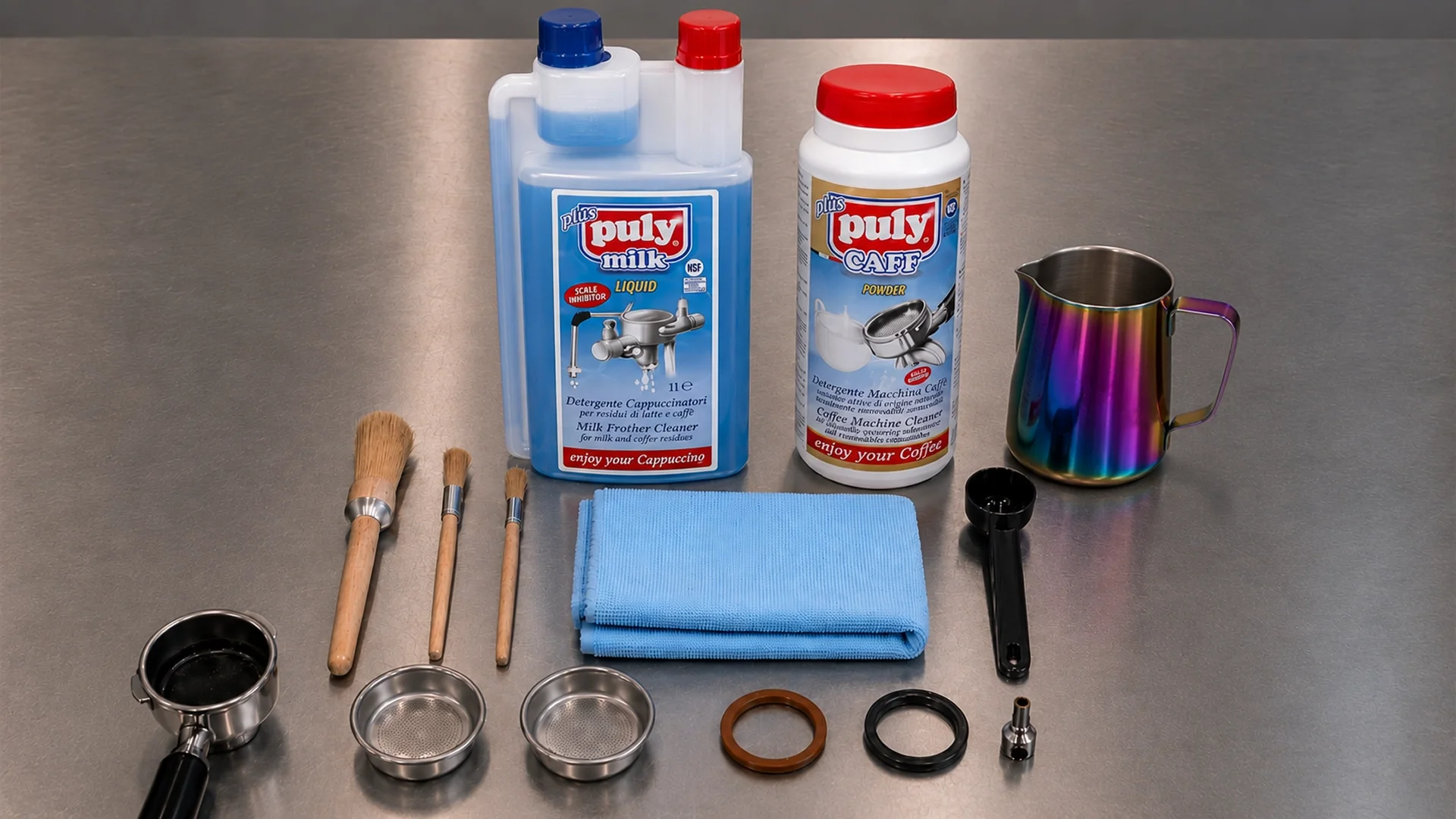
Before you start, prepare a dedicated cleaning kit.
Keeping these tools separate from general café cleaning supplies helps prevent cross-contamination and makes the closing routine faster.
Blind filter / backflush basket
Espresso machine cleaning powder
Group head brush
Separate machine cleaning cloths: one for steam wands, one for panels
Food-safe espresso machine descaler
Container for soaking parts
Once the kit is ready, start with the parts that collect milk residue and surface dirt during service: the steam wand and exterior panels.
Step 1: Clean the Steam Wand and Exterior Daily
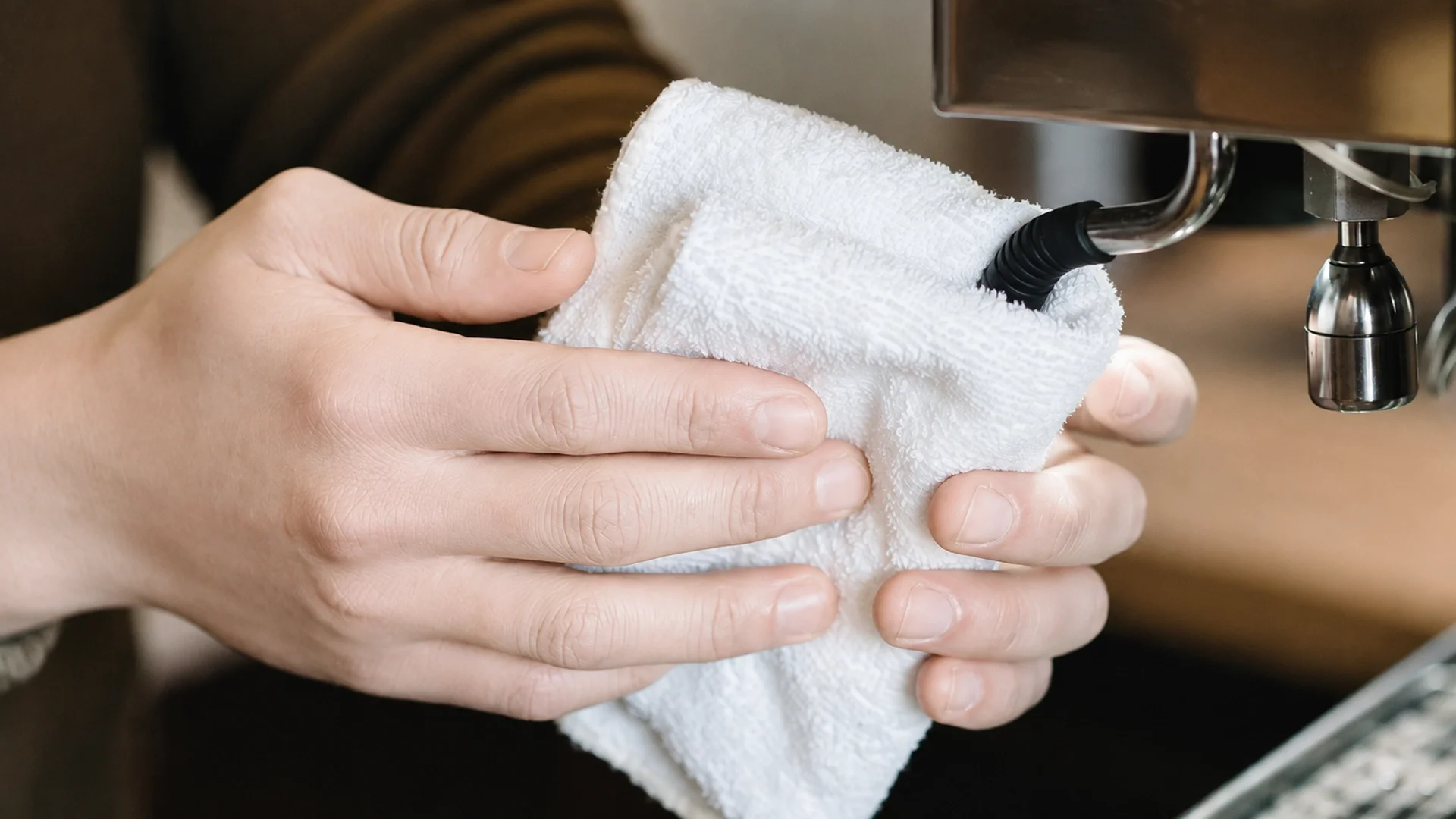
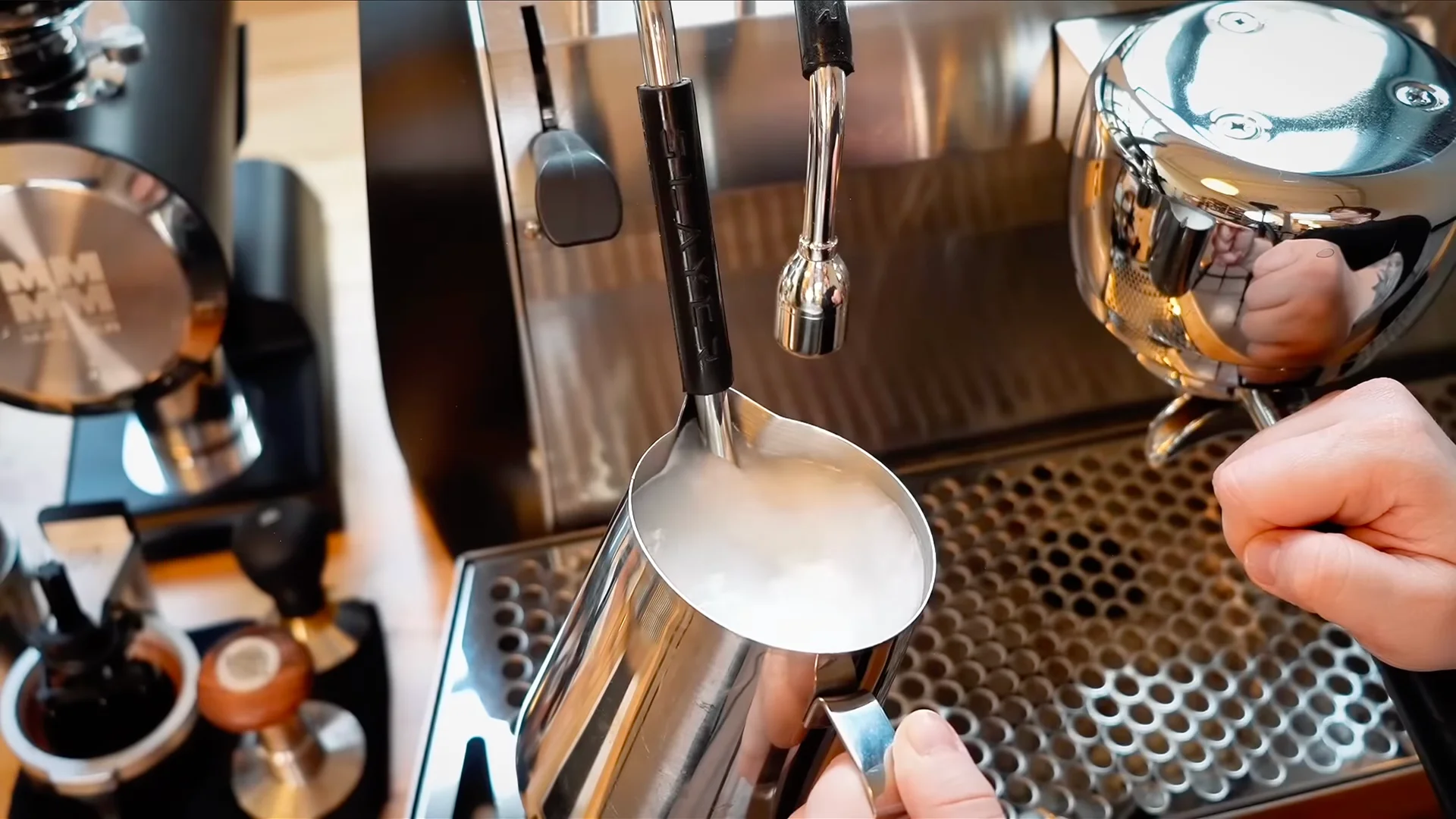
Purge the steam wand for 2–3 seconds after every use.
Wipe it immediately with the steam-wand-only cloth.
At close, soak the steam tip in hot water, then purge again.
Wipe group heads, drip tray, and panels with a separate cloth.
Why: regular steam-wand wiping keeps milk residue from building up, helps maintain strong steam flow, and supports a cleaner, faster service routine.
After the steam wand and exterior are clean, move to the espresso groups. This is where coffee oils and loose particles build up during the day.
Step 2: Rinse the Espresso Machine Groups with Water
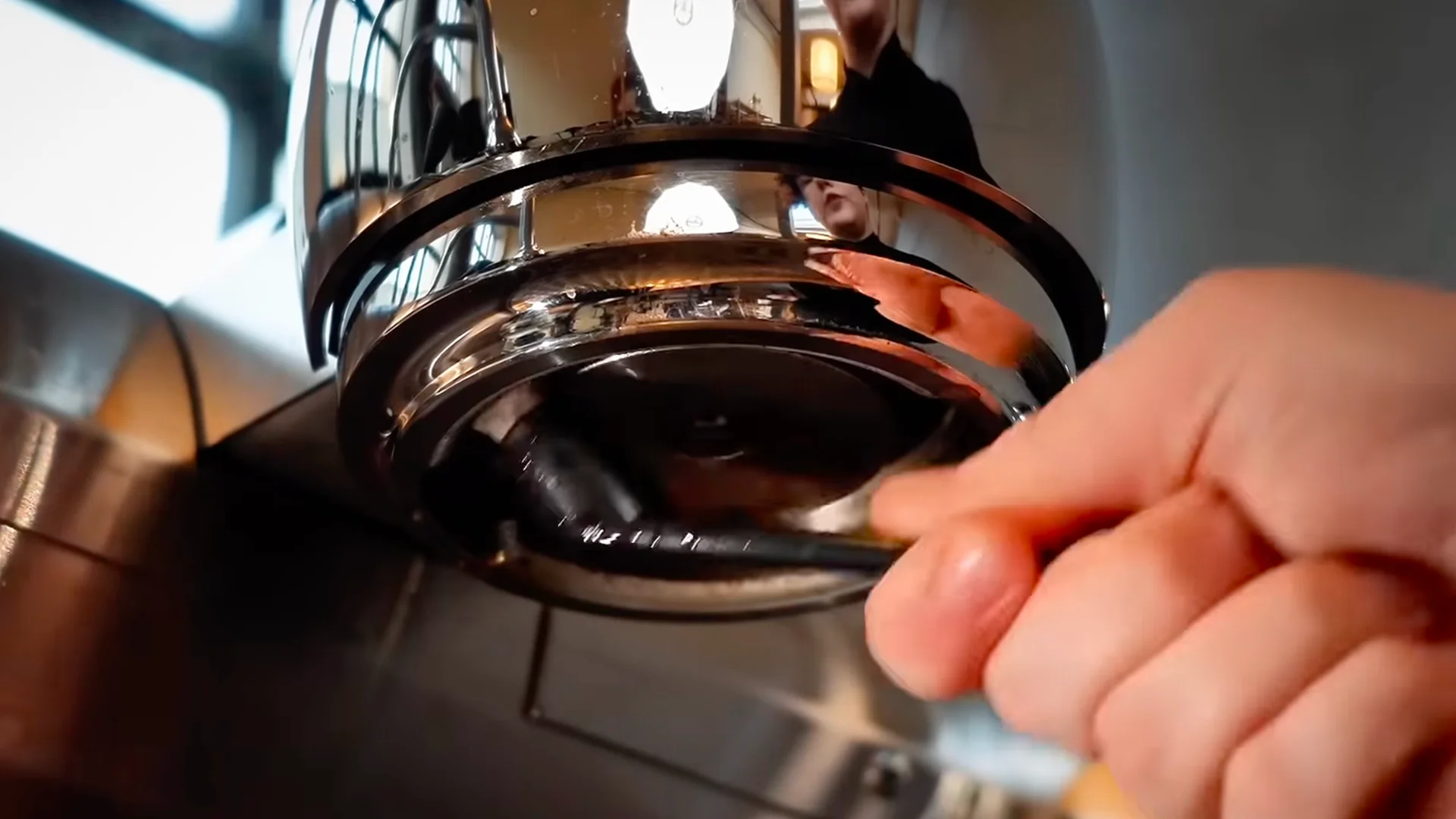
Insert the blind filter into the portafilter.
Lock it into the group head.
Run the pump for 10 seconds, then stop for 10 seconds.
Repeat 5 cycles per group.
Why: the blind filter seals the group and forces water back through the internal path, clearing loose particles from the 3-way valve and solenoid path.
A water-only rinse removes loose residue first.
The detergent step comes next because cleaning powder is needed to break down coffee oils and grease that water alone cannot remove.
Step 3: Backflush with Detergent at the End of the Day
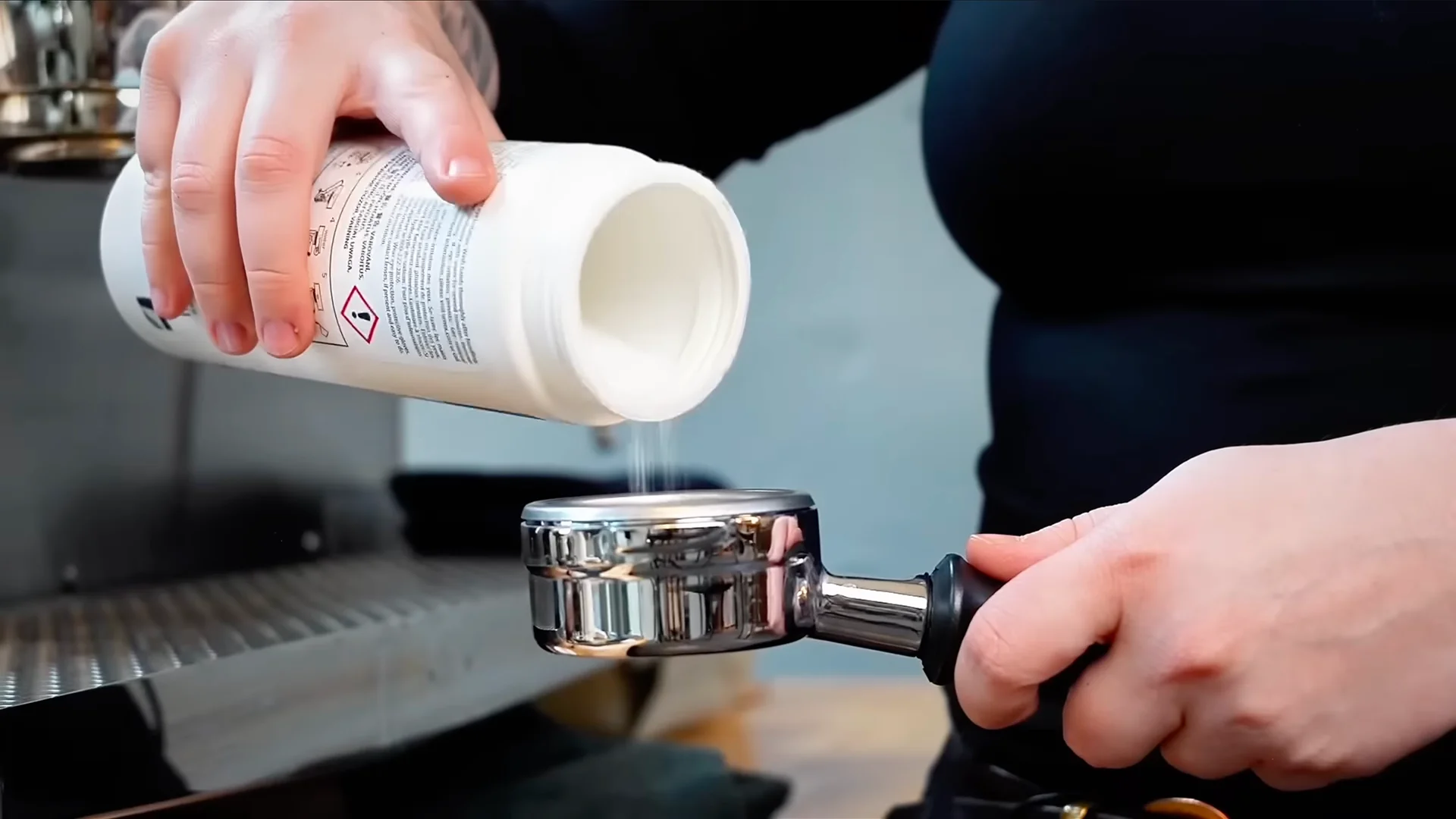
Add 2–3 g cleaning powder into the blind filter.
Run 10 seconds on / 10 seconds off for 5 cycles.
Remove portafilter and rinse.
Run 5–8 clean-water rinse cycles.
Critical: If you still smell detergent, keep rinsing.
Why: cleaning powder removes coffee oils and grease from the group, shower screen, baskets, and internal valves.
After the machine has been rinsed internally, clean the removable parts separately.
This prevents old oils from staying trapped in baskets, portafilters, and approved removable screens.
Step 4: Soak and Scrub Removable Parts
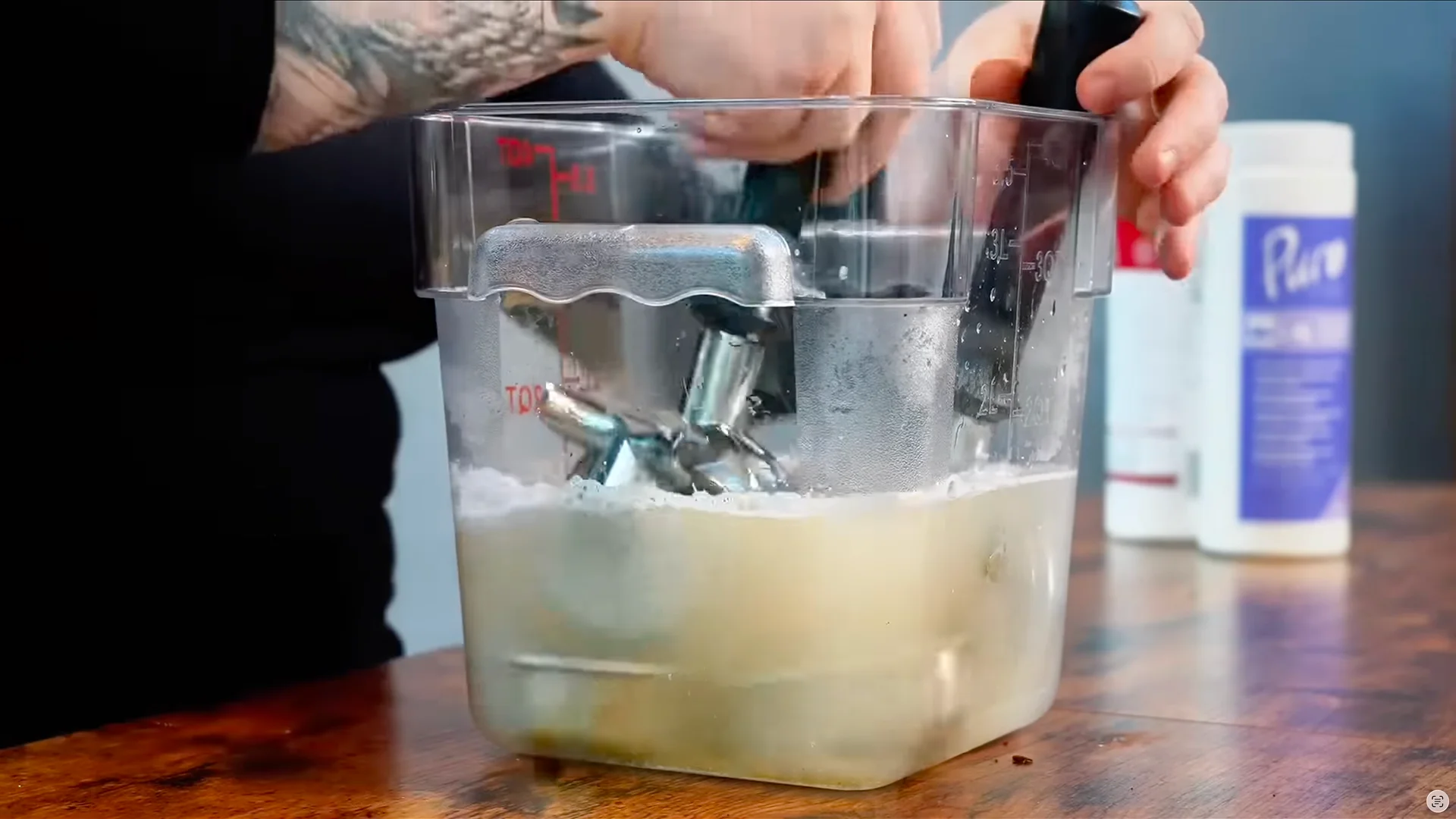
Soak portafilters, baskets, and shower screens in hot water + detergent for 15–30 minutes.
Scrub the removable parts with a dedicated espresso machine cleaning brush.
Rinse thoroughly and reassemble.
Critical: Do not fully submerge plastic or wooden handles.
Step 5: Descale When Water Hardness Requires It
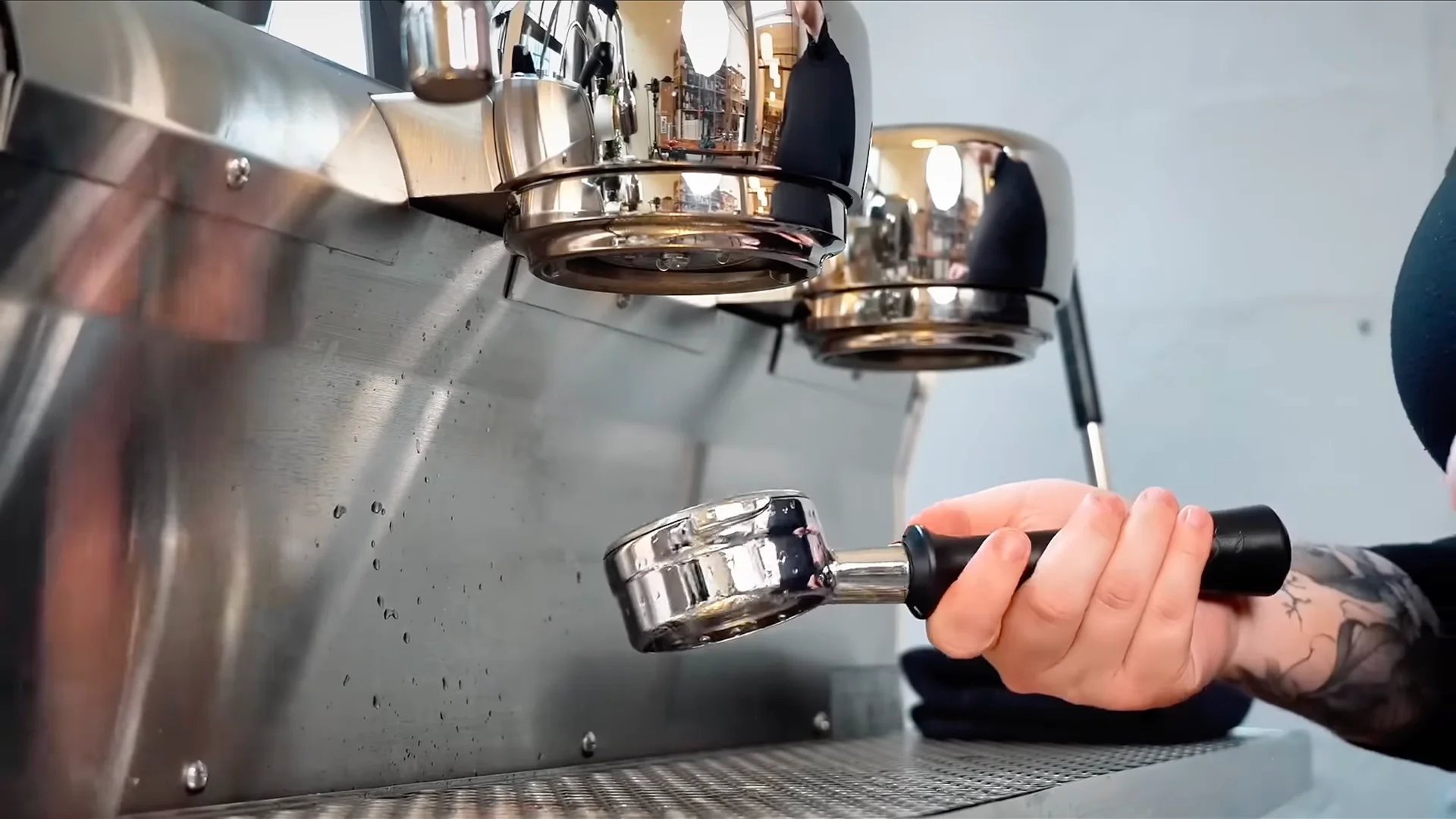
Descaling is different from the daily cleaning routine.
Do it only when water hardness, test results, or the machine manual show that mineral buildup needs to be removed.
Mix espresso machine descaler according to the manufacturer ratio.
Run it only through machine sections approved by the manual.
Respect the contact time.
Flush the machine thoroughly with fresh water until the rinse water is clear and no descaler smell remains.
Why: mineral buildup restricts flow, destabilizes pressure, and damages boilers.
Common Mistakes to Avoid
Skipping rinse cycles → bitter shots.
Using household cleaners → seal damage.
Ignoring water hardness → scale buildup.
Mixing milk cloths and general cloths → hygiene failure.
Descaling without checking the manual → boiler and valve risk.
Even when the steps are simple, small mistakes can cause bitter shots, hygiene problems, or machine damage.
Use this section as a final check before closing.
Build the Daily Cleaning Kit Now
Do not wait until cleaning problems affect service. Weak steam flow, bitter espresso, and pressure loss are signs that the cleaning routine is already overdue.
Add the core cleaning consumables to your cart for every closing shift.
FAQ
What if water backflush does not fix pressure issues?
If water flow is still weak, clean the small metal screen above the portafilter, where water comes out.
If the problem continues, have a service technician check the solenoid valve.
How often should I descale?
Soft water: monthly.
Hard water: weekly or based on test results.
Can I skip daily detergent backflush?
No. In high-volume cafés, oils polymerize inside the group and valves within hours.