
What You Will Need
a wine cooler, wine cabinet or climate-controlled room with suitable capacity;
an independent thermometer or temperature data logger;
labels for shelves and temperature zones;
a spreadsheet, logbook or software for wine inventory management;
a consistent procedure for receiving, storing, replenishing and writing off wine.
Step 1. Separate Storage Temperature from Serving Temperature
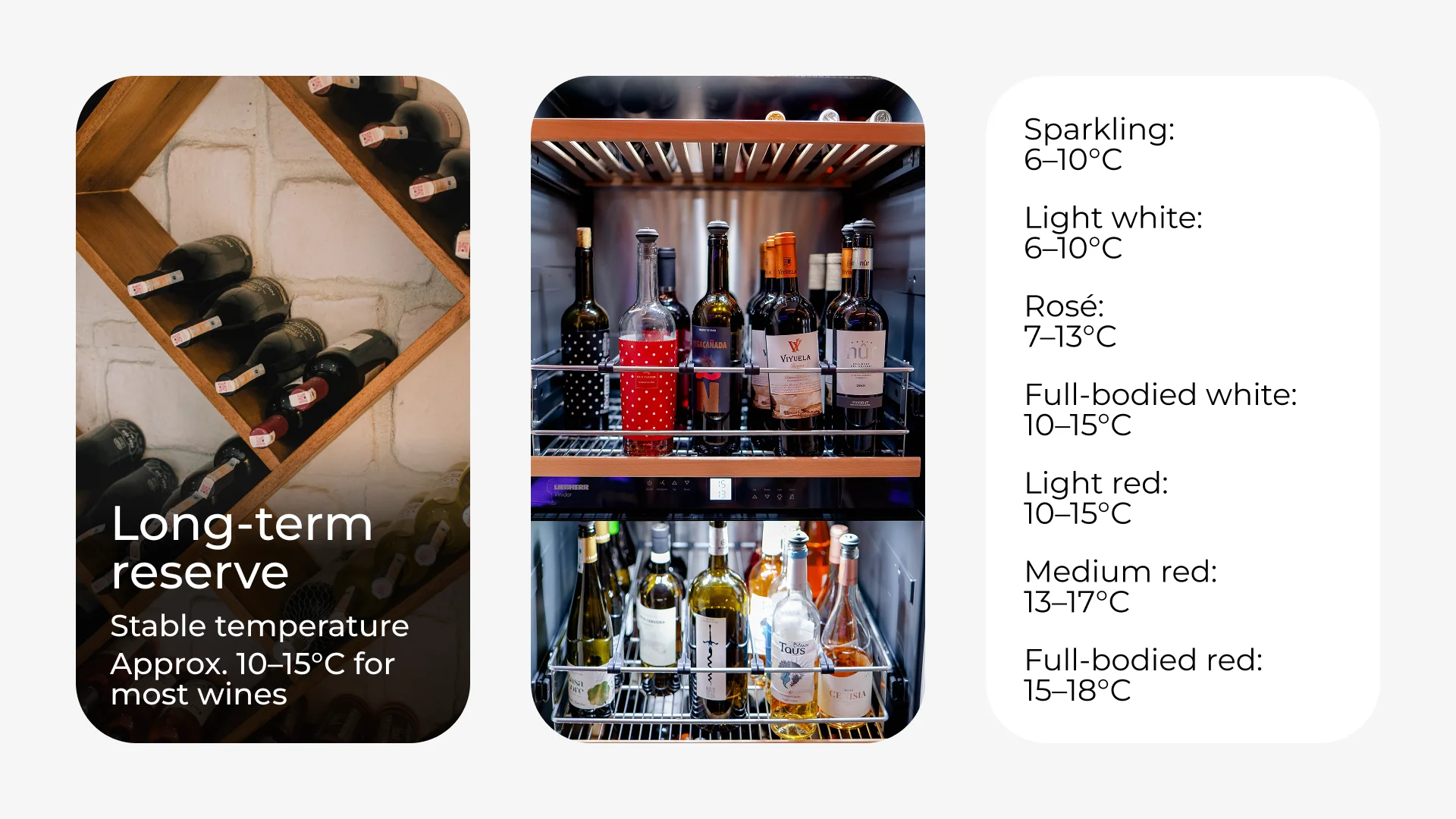
Storing sealed bottles and preparing wine for service are different tasks. For long-term storage, a stable temperature of approximately 10-15°C suits most wines. Consistent conditions help wine develop gradually and maintain a suitable environment for bottles sealed with natural cork.
Serving temperature depends on the wine style:
Wine category | Approximate serving temperature |
Sparkling wine | 6-10°C |
Light-bodied white wine | 6-10°C |
Rosé wine | 7-13°C |
Full-bodied white wine | 10-15°C |
Light-bodied red wine | 10-15°C |
Medium-bodied red wine | 13-17°C |
Full-bodied red wine | 15-18°C |
These are practical guidelines, not universal settings. A sommelier may adjust them according to the grape variety, age and structure of the wine, as well as the dining-room temperature. Wine gradually warms after it is poured, so it may be served slightly cooler than the desired temperature in the glass.
Choose the setting according to the wine style rather than the phrase “room temperature”. At a dining-room temperature of 22–24°C, red wine will usually benefit from some cooling before service. White, rosé and sparkling wines are generally served at 6°C or above so that their aromas remain expressive.
A single-zone model is normally sufficient for reserve stock held at one stable temperature. Two independently controlled zones are useful when red and chilled wines must be ready for service at the same time.
Step 2. Create Stable Storage Conditions
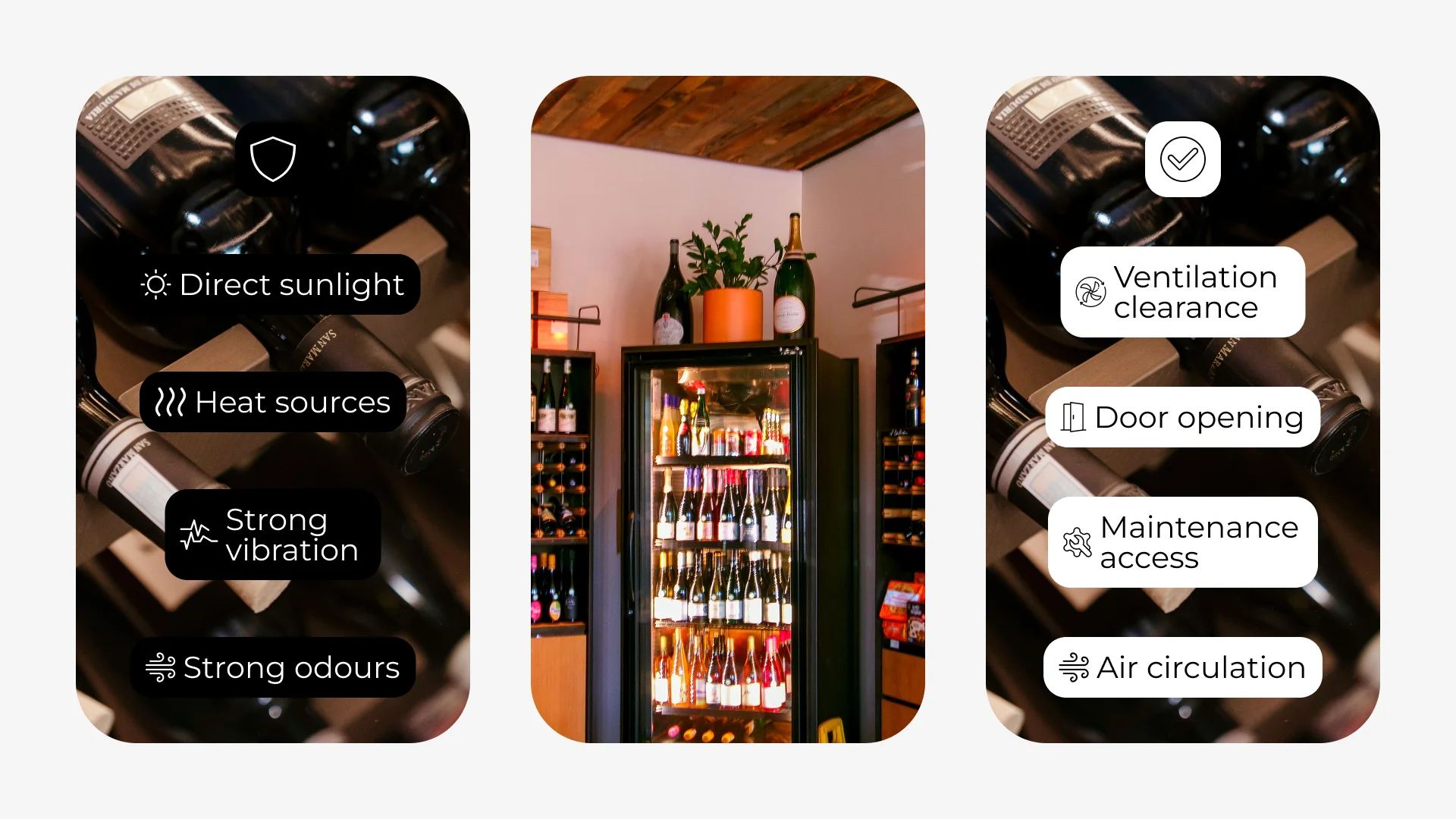
The correct wine storage temperature is only one part of the system. Light, humidity, ventilation, bottle position and equipment location also matter.
Choose a position away from ovens, cookers, dishwashers, radiators and direct sunlight. Check the manufacturer’s required ventilation clearances before installation. The installation space must allow for heat dissipation, full door opening and maintenance access.
Protection from bright light is particularly important for white and sparkling wines in clear bottles. A glass door makes stock easier to see, but the cooler should be positioned away from direct sunlight. Check the specifications of the door glass and internal lighting.
In rooms used for long-term wine storage, relative humidity of approximately 50-80% helps protect natural corks and labels. The area should also have air circulation and remain free from strong odours.
Bottles sealed with natural cork are traditionally stored horizontally over longer periods so that the cork remains in contact with the wine. Screw-cap bottles can be stored vertically. Always consider bottle shape, shelf configuration and the wine producer’s recommendations.
Keep mature wines with sediment in a stable position away from equipment that produces constant, strong vibration. This helps the sediment remain settled until the bottle is prepared for service.
Step 3. Calculate the Required Capacity
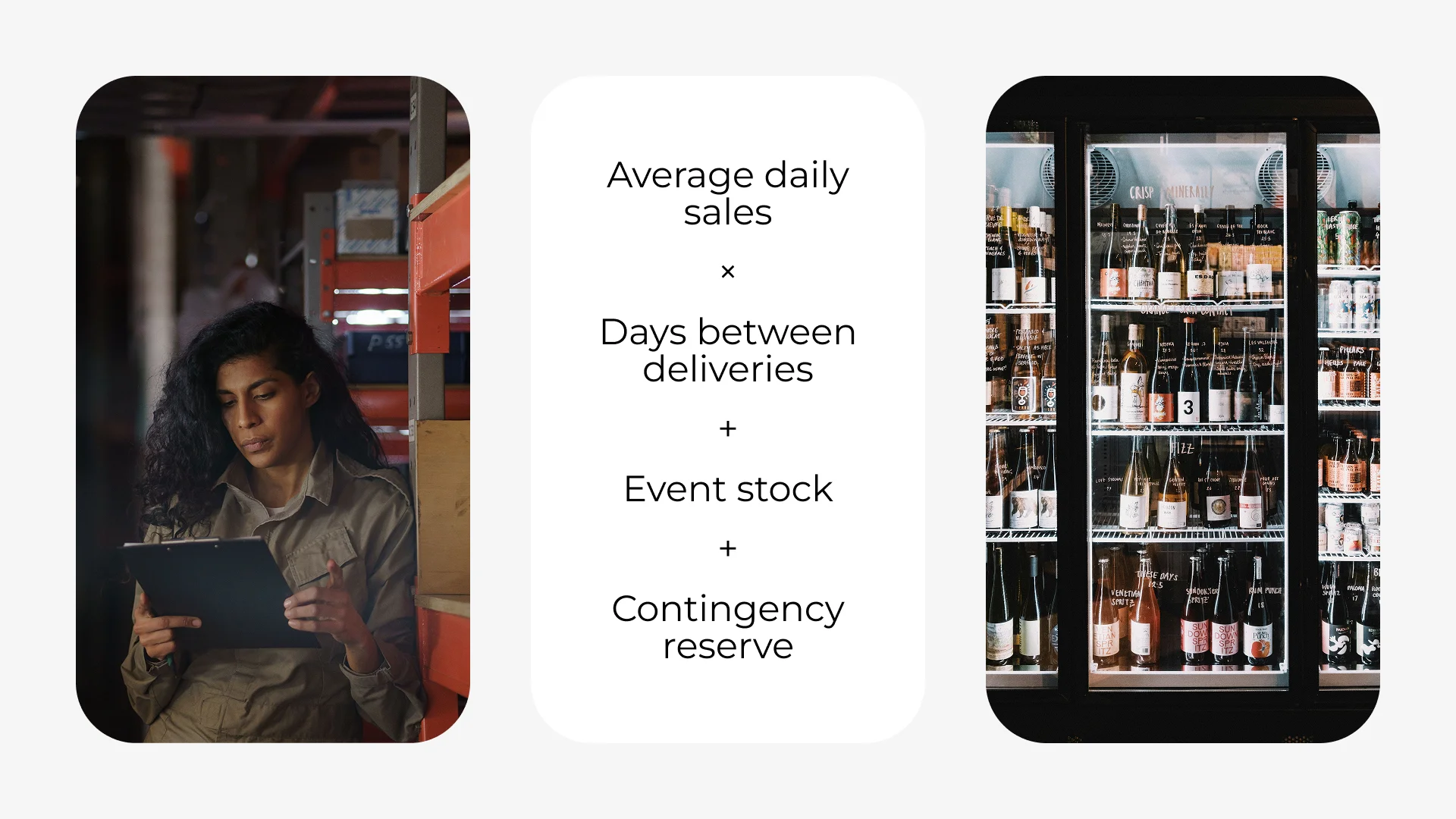
The number of wines on the list does not directly indicate the required capacity. A single wine may need several bottles for the current service as well as reserve stock until the next delivery.
Use this basic formula:
Required capacity in bottles = average daily sales × days between deliveries + stock for planned events + contingency reserve.
Include weekend sales peaks, wines sold by the glass, events, suppliers’ minimum order quantities and slower-moving lines. Also calculate how many bottles must always be kept at serving temperature.
The rated capacity of a commercial wine fridge is based on bottles of a particular shape and a standard shelf arrangement. Champagne and Burgundy bottles, magnums and other formats use more space, so actual capacity may be lower. Leave room for air circulation and convenient access: staff should be able to retrieve a bottle quickly while keeping the shelf layout organised.
Step 4. Select the Right Wine Refrigeration Equipment
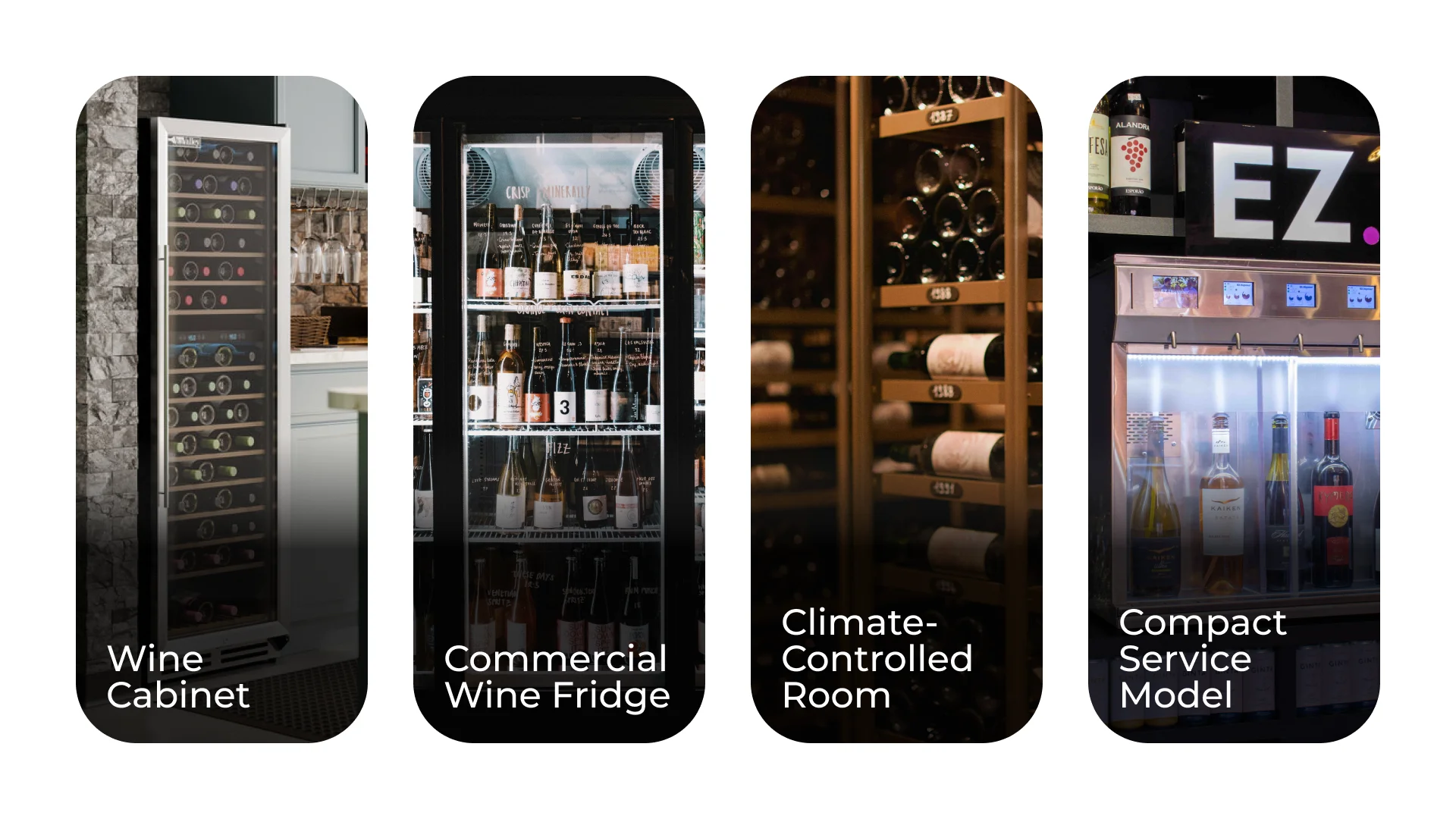
The choice of wine refrigeration equipment depends on stock volume, installation location and service requirements.
Wine cabinet. Purpose-built shelves, a suitable temperature range and orderly presentation make it practical for storing and displaying a collection. A single-zone model suits reserve stock, while a dual-zone cabinet can hold wines at different serving temperatures.
Commercial wine fridge. This equipment is designed for frequent opening and daily restaurant use. Compare bottle capacity, usable volume, temperature range, shelf design, ventilation requirements and maintenance access.
Cold room or climate-controlled storage room. This solution suits a large wine stock but requires professional planning that covers temperature and humidity control, lighting, racking, monitoring and the route from receiving to storage.
Compact service model. A small unit beside the bar or sommelier’s station reduces movement during service and is particularly useful for wines sold by the glass.
Requirement | Model | Verified specifications |
Wines by the glass and bottles for immediate service | Up to 8 open or sealed bottles; two zones at 3-18°C; 800 × 350 × 293 mm | |
Compact service stock | 137 L; 5-18°C; 570 × 595 × 820 mm | |
Medium-capacity service stock | 230 L; two zones at 5-18°C; 569 × 595 × 1,215 mm | |
Larger service stock | 265 L; two zones at 5-18°C; 569 × 595 × 1,397 mm | |
Reserve stock at one temperature | 542 L; 5-22°C; 685 × 700 × 1,833 mm |
Before ordering, confirm the external dimensions, door-opening clearance, ventilation space, electrical requirements, doorway widths and the route for moving the equipment. If the cooler will be installed in furniture or a recess, choose a model designed for that type of installation.
Step 5. Separate Service and Reserve Stock
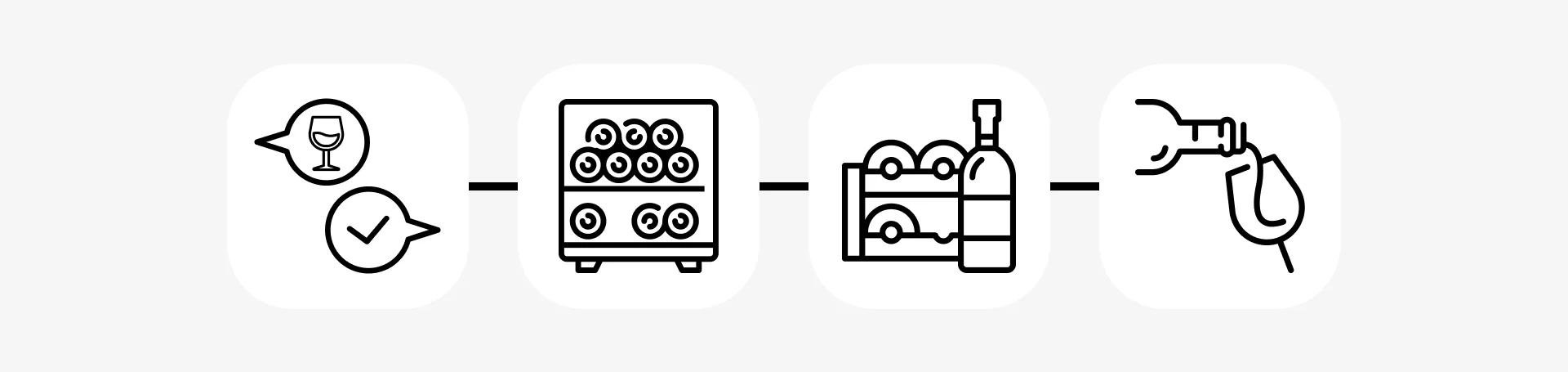
Divide the bottles into two groups:
service stock – wine required for the current shift or trading day;
reserve stock – sealed bottles held for future replenishment.
Within each group, arrange wines first by temperature requirements and then apply one consistent system: wine type, region, producer, position on the wine list or internal code. Label every shelf and zone, even when the door is transparent. A fixed layout speeds up bottle retrieval and improves inventory accuracy.
The first-in, first-out principle (FIFO) works for most fast-moving wines: earlier deliveries are used first. Premium wines and bottles intended for ageing may have a specific period when they are best served, so they require a separate release plan.
When receiving a delivery, inspect the packaging, corks or caps, fill levels and any signs of leakage. Record the wine, vintage, supplier, arrival date, quantity and storage location, as well as transfers, sales, opened bottles, damage and write-offs. This record supports wine inventory management, accurate stock control and timely ordering.
Step 6. Monitor Conditions and Equipment
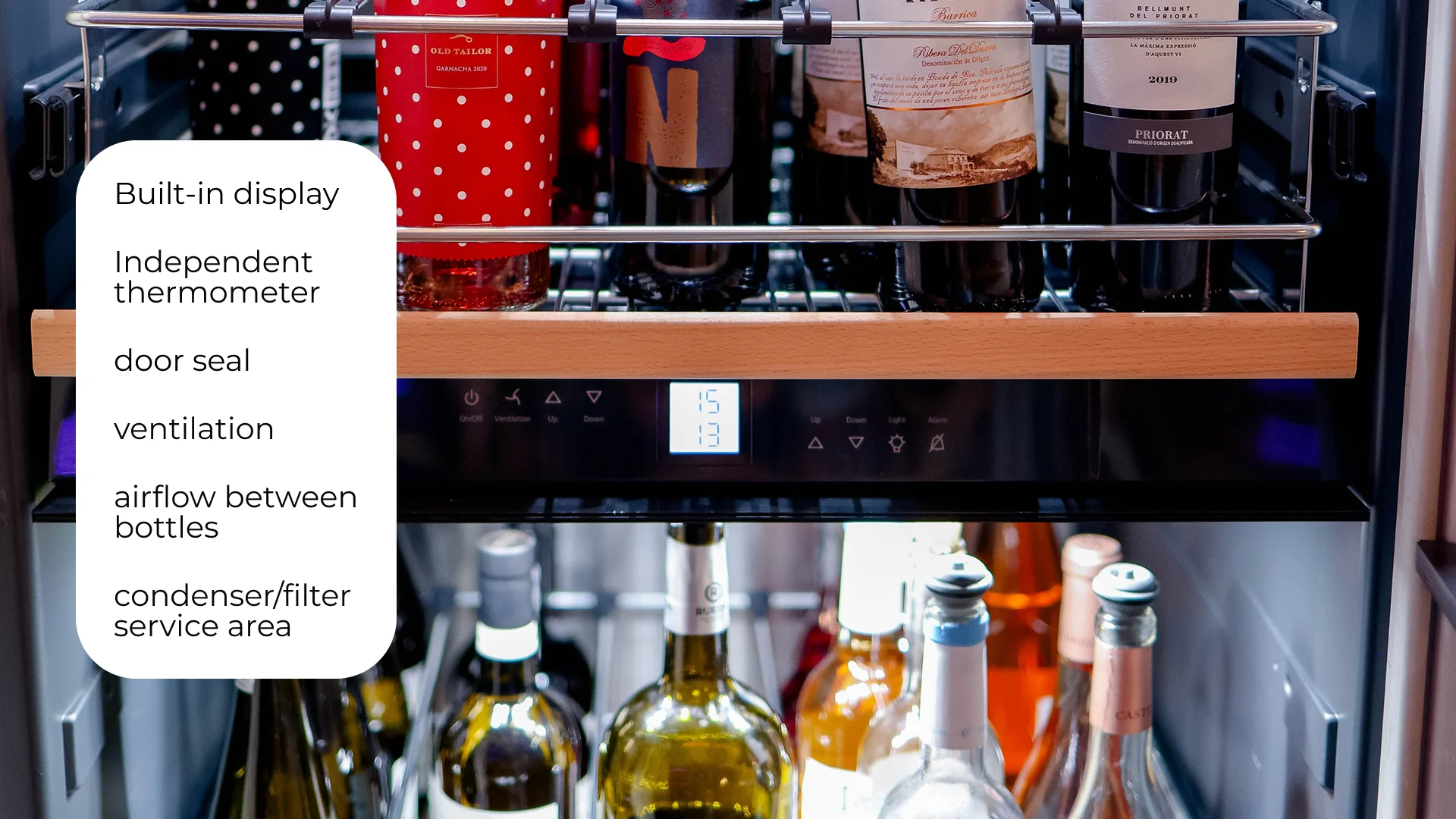
The built-in display shows how the system is operating, while an independent thermometer or temperature data logger can verify the actual temperature in different parts of the cooler. Compare readings after installation, maintenance, a power cut, a significant change in loading and during particularly hot weather.
During routine checks, confirm that the door closes securely, seals are clean, ventilation openings are clear and air can circulate between bottles. Clean filters and accessible condenser components at the intervals stated by the manufacturer. Unusual noise, condensation, temperature fluctuations or longer compressor cycles may indicate that the unit needs inspection.
A daily check can take less than a minute: review the temperature, display and door condition. Add seals, ventilation, shelves and the agreement between physical stock and inventory records to a weekly or monthly checklist. Staff should also know what to do if the power fails or the cooler develops a fault.
Common Wine Storage Mistakes
Using a general-purpose refrigerator for long-term storage. It can chill bottles briefly but may not provide the most suitable temperature range or shelf arrangement for extended wine storage.
Confusing storage and serving temperatures. Reserve stock can remain at one stable temperature while service stock is brought to the required serving temperature in advance.
Selecting equipment by rated capacity alone. Non-standard bottles and changes to the shelf layout reduce the number of bottle positions available in practice.
Installing equipment beside a heat source. This increases the load on the cooling system and makes stable temperature control more difficult.
Packing shelves too tightly. This restricts air circulation and slows bottle retrieval.
Leaving stock unlabelled. Clear labels complement reliable cooling by improving stock control, bottle retrieval and timely replenishment.
Organise Storage Around Your Restaurant
Start with sales data, delivery frequency and the structure of the wine list. Separate reserve stock from service stock, calculate the required capacity, then determine the number of temperature zones and the installation location.
If you need help selecting a wine cabinet, wine cooler or other wine storage equipment, send the HoReCa Shop team details of your wine list, expected stock volume, available space and how the wine will be served. The team can recommend a suitable solution for your restaurant and help confirm the installation requirements.
FAQ
Can red and white wine be stored together?
Yes. Sealed bottles can be stored in the same zone at a stable temperature of 10-15°C. Separate settings are mainly required when different wine styles need to be prepared for service.
Do all bottles need to be stored horizontally?
Horizontal storage is particularly relevant to bottles sealed with natural cork over longer periods. Screw-cap bottles can be stored vertically.
Is one large cooler better than several compact models?
A large single-zone model is convenient for reserve stock, while a compact dual-zone cooler supports service. Many restaurants combine the two: the main reserve is stored separately, and a smaller professional wine cooler near the bar holds the most frequently ordered wines.